This essay was originally written for a course at John Jay College taught by Dr. Corinna Mullin
Forced exposure to global markets is a hallmark of neoliberalization in Global South countries. Conventional economic wisdom holds that to modernize, emerging economies must embrace free markets, both by liberalizing trade policy and deregulating land and labor markets. Not only does this strategy rarely work, it also creates a dependence on global markets which first and foremost serve Western nations and their ruling classes. Agricultural consolidation dispossesses peasant farmers, and multinational agribusinesses impose conformity to Western agricultural standards, which may or may not apply to local contexts. This dependence puts Global South countries at an economic disadvantage even at the best of times, but more importantly, it imposes a fragility that can be exploited by dominant powers at will. As such, economic and political investment in agricultural capacity represents a safeguard against external domination in Global South regions. This essay seeks to examine the role of indigenous agricultural capacity in resisting imperial domination in the Middle East and North Africa (MENA) region. For these purposes, indigenous agricultural capacity refers to local farmer-led agricultural productive capacity that avoids using multinational capital, instead enjoying state support or using labor-intensive production methods
Destruction of Agricultural Capacity as Primitive Accumulation
The reorientation of agricultural systems to serve imperial interests has taken place in the region for hundreds of years. The case of Algeria illustrates the process by which Western empire in the colonial era converted an economy from domestic agrarianism to extraversion and unequal exchange. Precolonial rural Algeria had clearly defined private property rights, not unlike the French property regime, that included rights of inheritance, the right to purchase land, the right of usufruct on common lands, and so on. Indeed, French colonial scholars and administrators admitted the legitimacy and sophistication of these customary property regimes (Bennoune 1976, 203-206). However, the French colonialists used extreme violence to destroy these existing regimes, and implemented their own. The French military defended their indiscriminate massacres of rural Algerians as necessary to “bring European civilization to these barbaric countries,” even as they admit that their actions go “beyond the limits of common morality” (ibid, 210). Following in the trail blazed by the army were the surveyors and administrators, who used suspect legal methods to dispossess the fellahin of their land. By 1954, French colons controlled over three million hectares of Algerian farmland. Colons each owned an average of 109 hectares of highly productive land. In contrast, seventy-three percent of Algerian peasant families owned less than ten hectares of marginal land (ibid, 212-213). Thus, Algerian peasants, formerly protected by an organic system of property rights enforced by local notables, were reduced to proletarian or semi-proletarian status. The interplay between native dispossession and colonial extractivism meant that Algerian wage laborers had to increase labor power expended, and generate a greater output than ever, to accommodate the surplus value demanded by the French (ibid, 218). The French colonial government destroyed indigenous agricultural capacity to three ends: primitive accumulation for French colonists, the creation of a proletarianized labor force, and the extraversion of the Algerian economy to the benefit of France.
Other countries in the region followed a similar pattern of dispossession and extraversion induced by colonial interests. Export-oriented production in the MENA region, including cotton, wine, tobacco, mulberries, and raw silk, proliferated during the 19th century. These economic structures, already oppressive in peacetime, were ruinous at war. As an example, trade blockades from World War I killed half a million people in Greater Syria (Martiniello 2022). When one region’s economy is subordinated to the service of another, the subservient economy will always suffer more in times of crisis.
Global South Responses: Food Security, Food Sovereignty
The inability of Global South countries to respond to famine gave rise to the concept of food security, which prioritized the ability of a state to feed its people regardless of the source or quality of the food. This context-blind concept accommodated a capital-friendly global food system where Global South countries are reliant on cheap imports of staples, often from core countries where they are heavily state-subsidized. While this may prevent famine in the best of times, it protects the existing core-periphery relationship and provides little protection in crisis. As Global South farmers are priced out of competition, they are forced to sell their land, which allows larger landowners to consolidate. This migration from the countryside to the city has exacerbated overcrowding and resource shortages in urban areas. The failures of hollow food security regimes have given rise to peasant-led movements for food sovereignty, which call for “re-envisioning the conditions necessary to develop sustainable and democratic forms of social reproduction” (McMichael 2013, 3-4). These movements, though often characterized as populist or traditionalist, and thus misguided, in fact represent a rejection of the market-based logic of food security in favor of a “claim for food self-reliance as a sovereign right of peoples” (ibid, 5). As such, movements for food sovereignty prioritize not just the interests of individual peasants, but the interests of Global South populations as a whole.
Food sovereignty offers not just a path to preventing famine, but can act as an avenue to delink peripheral countries from their subservient position in the world system. Slaheddine el-Amami was a Tunisan agro-economist who in his life and work bridged the divide between academic and peasant knowledge. As an agronomist who worked in state institutions, Amami was struck by the institutional disdain for the so-called “traditional” methods of food production, in favor of imported seeds and capital goods. He recognized that the same international forces and institutions that were supposedly modernizing Tunisia’s agriculture were the ones reproducing Tunisia’s position as a periphery state (Ajl 2018, 11). Max Ajl situates Amami’s thought in a context where agricultural techniques from Europe and North America were being applied to Tunisia with little regard for local conditions. Amami’s prescriptions included the establishment of special institutions and the “total Tunisification” of agricultural research in the country (ibid, 12). Amami did not spurn technology or modernity; indeed he called for the widespread use of solar energy, and for Tunisian agricultural projects to be heavily staffed by engineers as French colonial ones once were. However, it was his contention that such measures must also be informed by local knowledge and even devolved to local control (ibid, 14-15). Amami’s ideas are influential in MENA agronomy, but the government he served did not necessarily agree with his prescriptions.
Habib Ayeb’s film Cous Cous features a number of Tunisian peasant farmers who readily corroborate Amami’s claims that international institutions wrecked the country’s agricultural system, and must be avoided in favor of using the seeds of their ancestors (2017). Cous Cous also shows the failure of the Tunisian state to effectively implement Amami’s ideas. Peasants express dissatisfaction with the government, which they feel neither represents nor serves their interests.
Palestine, which is an avatar for those committed to anti-colonial struggle in the MENA region and indeed the world, is a hotbed for food sovereignty theory and practice. Cooperative farmers situate their projects within the ongoing anti-colonial struggle. These farms are a way for Palestinians to feed their communities outside of the bounds of Israel-controlled trade. To make this possible, participants minimize their reliance on capital inputs in favor of the ecosystem services of local plant life and livestock. These farms also promote a reorientation of Palestinian life towards collectivism and solidarity, a necessary foundation for effective anti-colonial struggle (Fattaleh and Albargouthi 2022). Manal Shqair coined the term eco-sumud, which represents the steadfastness of Palestinian resistance (sumud) in the context of ecological justice and sovereignty. This steadfastness entails rejecting any systematic inferiority of Palestinians, cultivating a relationship with land based on reciprocity and interdependence, ensuring that land, water, and knowledge are shared (and not commodified or monopolized), ensuring that women are primary actors in the anti-colonial struggle, and reaffirming the fact that anti-colonialism is inherent and ingrained among occupied populations (Shqair 2023, 79). This conceptualization positions agricultural capacity as one of a number of ties between anti-colonial resistance and ecological sovereignty. There are few populations with as little political rights as Palestinians, but building a food system outside of Israeli capital and trade can not only feed Palestinians, but also act as a catalyst towards continuing the wider struggle against colonialism.
Case Studies: Sanctions, War and Climate Change
Syria has been engaged in a complicated war with civil and international actors for over a decade. The war and its concomitant sanctions, as in any conflict of this scale, has caused shocks and crises for the Syrian food system. However, Syria’s history and continued commitment to supporting domestic industry, including agriculture, has mitigated both the economically and militarily violent aspects of the war. In the twentieth century, Syria used many tools to bolster its domestic agriculture markets, including overmarket state-purchasing prices, favorable loan terms to farmers, subsidization of inputs, and state-organized crop rotation schemes. This interventionist regime allowed Syria to maintain self-sufficiency in legumes, cotton, fruits, and vegetables, and the country even exported wheat between 1995 and 2008. However, Syria was not totally immune to the influence of IFI’s and neoliberal reformers. Though the agriculture sector liberalized more slowly than other areas of the economy, by the early 2000s subsidies were cut, land was privatized, and total agriculture investment declined (Matar 2022, 181-182). Since the beginning of the conflict in 2011, Syria has suffered from the two prongs of twenty-first century imperial violence: sanctions and military intervention. Initially, Syria’s agricultural sector suffered from the conflict along with the rest of its economy. Infrastructure was destroyed, transportation capacity was disrupted, fuel was scarce, and farmland was appropriated by enemy powers (ibid, 187). As production fell, the state turned to its interventionist past to stop the bleeding. Agricultural production plans were crafted by the government, and implemented using price caps, subsidies, and good credit terms for farmers. The government regulated agriculture “from production to storage, marketing and distribution, including the transportation of crops across the country by public services” (ibid, 189). Farmers have also resisted the sanctions regime by using local inputs, and in some cases, relying on traditional farming methods. The commitment to prioritize agricultural production and ensure affordable food has helped consolidate state support in the territory they control, contrary to the goals of Western sanctions. The result is that while per capita food consumption has declined due to the war, widespread hunger has been prevented (ibid, 191-192). The Syrian government understood that to preempt famine, and the loss of support sure to follow, the state must return to interventionist policies which increase agricultural capacity, and direct the agriculture sector towards feeding people, not making a profit.
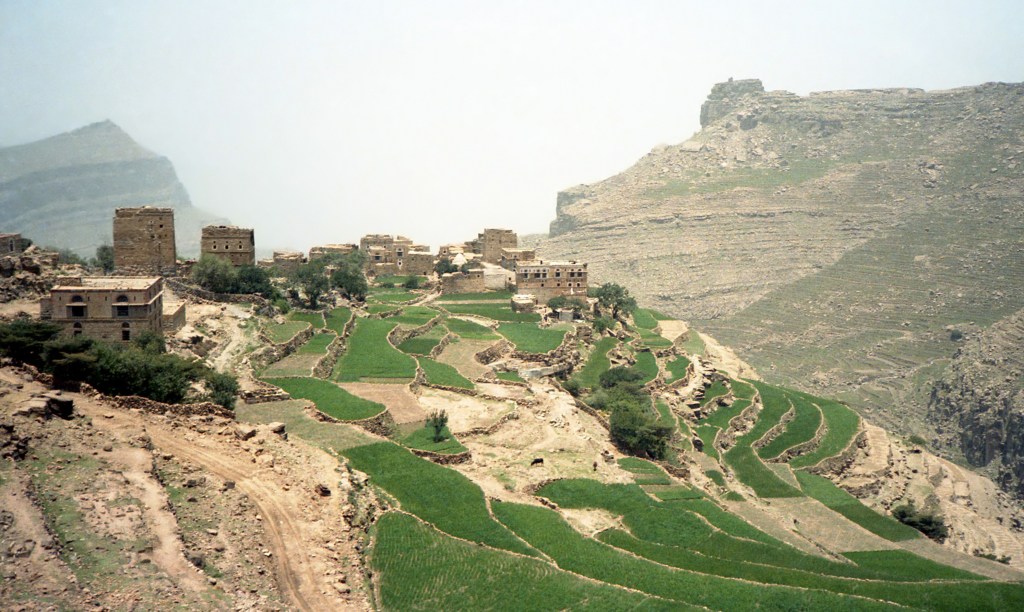
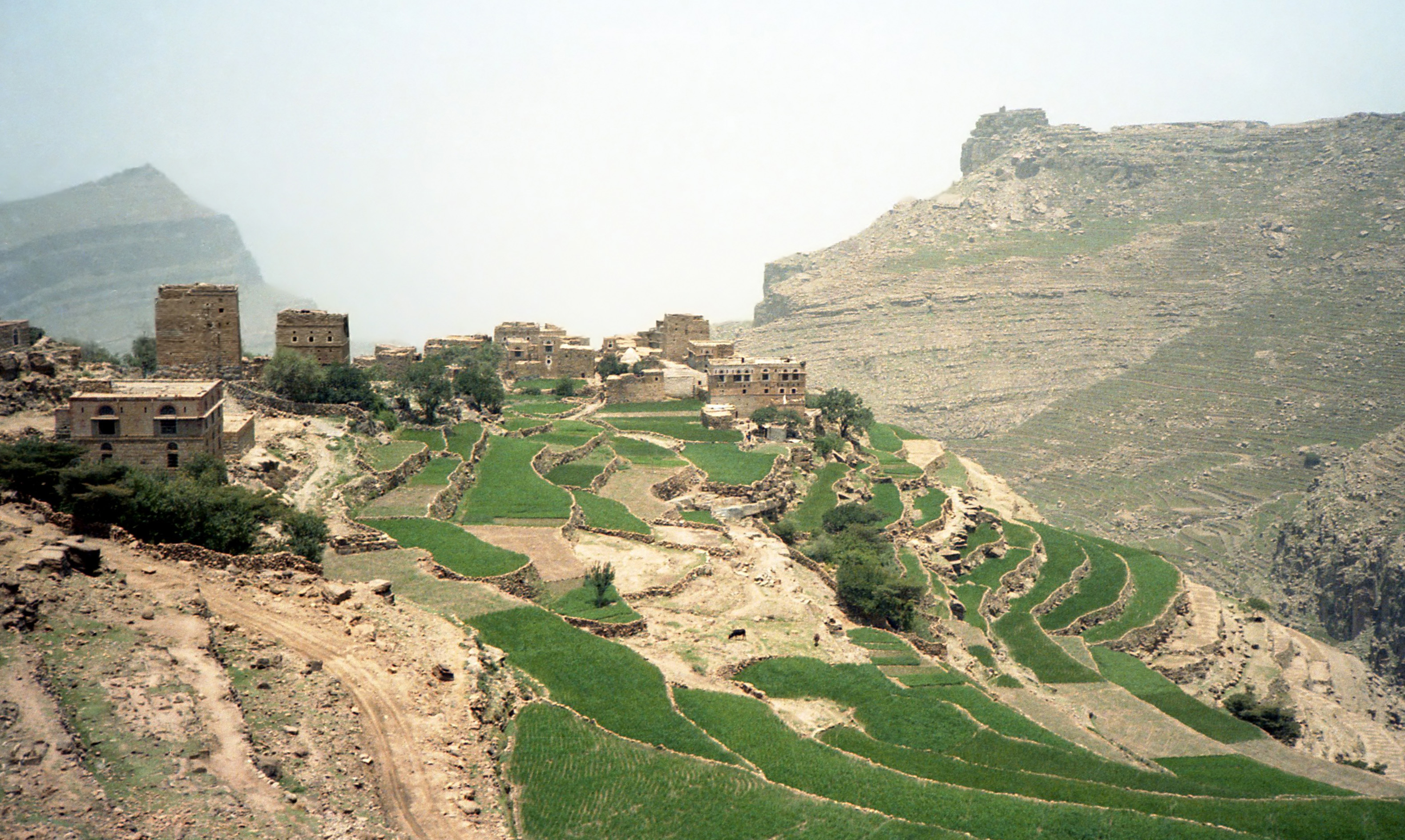
Yemen has been roiled in its own civil conflict almost as long as Syria. Ansarallah (also known as the Houthis) took over the western part of Yemen in late 2014, including the capital Sanaa. Their main enemy is a competing Yemeni government, backed by a coalition of Saudi Arabia and Gulf kingdoms. Starting in 2015, the Saudi-backed coalition shifted the focus of its aerial bombardment from military targets to transportation and agricultural infrastructure. These measures, combined with the relocation of the central bank out of Houthi-controlled Sanaa, the closing of the airport in Sanaa, and occasional blockades of ports, have starved Ansarallah-controlled Yemen, with eighty percent of the population requiring food assistance. This induced famine is no mistake, with a Saudi diplomat confirming that “once we control them, we will feed them” (Mundy 2018, 7). To understand Yemen’s vulnerability to famine, the political economy of its agricultural sector must be examined. Prior to the war, Yemen was heavily reliant on food imports. Towards the end of the twentieth century, Yemen’s economy was thrust into the global market by neoliberal counterreforms. These policies allowed for the mass importation of subsidized American wheat, while exporting labor power to Saudi Arabia and the Gulf. The nature of Yemen’s mountainous, labor intensive and subdivided agriculture made it particularly vulnerable to destruction by global markets (ibid, 8). What agricultural capacity remained became oriented towards cash crops for export, which required higher capital expenditures on things like centralized irrigation (ibid, 13). Once a country’s agricultural capacity has been hollowed out, as in Yemen, all it takes for an invader to create a famine is to use economic tools (like taking over a central bank) to prevent imports, and bomb what little remaining agricultural capacity there is. Furthermore, the orientation towards cash crop production centralized the remaining Yemeni agriculture, making it easier for the Saudi-backed coalition to render useless wide swathes of agricultural land just by bombing a central irrigation system. As Martha Mundy points out, this deliberate targeting of agricultural capacity to starve a population is a war crime (ibid, 18). However, as long as the perpetrator of these crimes is a friend to the imperial core, international law will be no help to the people of Yemen-
Agricultural capacity is not just a tool for Global South countries engaged in direct conflict, but also represents a tool for survival in the emerging global climate catastrophe. Climate change, and who bears responsibility for it, is already a factor in military and political disputes; Max Ajl points out that Syria’s struggle to maintain food capacity during coincident wartime and drought “ought to be weighed against the global North’s climate debt which it owes the Syrian government” (quoted in Matar 2022, 182). The Global South accounts for just ten percent of global greenhouse gas emissions (El Nour 2023, 109). However, the legacy of colonial domination and the continuing enforcement of periphery status on these states ensures that they will bear more than their fair share of climate catastrophe. As El Nour points out, agriculture is both a contributor to and victim of climate change (ibid, 110). Agriculture is a main driver of greenhouse gas emissions. Thus, delinking from the global capitalist agriculture market is not just a military imperative for peripheral states, but a necessity to mitigate the effects of climate change. According to Philip McMichael, the peasants at the root of the food system occupy a unique position:
Peasant mobilization may be seen as the (not too) early warning of a socio-ecological catastrophe in the making – with a unique ability to name the problem. The uniqueness is not an abstract function of being “capital’s other,” rather it is the ability to problematize current world ordering from the most fundamental perspective of its form of food provisioning (integrating environment, energy and resource flows with urban ‘civilization’). – McMichael 2013, p. 4
In other words, peasants are the first victims of the climate crisis, but they also possess the ability to acutely diagnose the onset of increasing global turmoil. The climate crisis cannot be solved without the political and economic liberation of Global South peasants, and by extension, the liberation of Global South populations who depend on them for food. What is required is “a more radical and local participatory approach, in order to regenerate and preserve local natural resources,” that combines pressure from below with consistent and resourced planning from above (El Nour 2023, 127). Imperial violence threatens the environment in a multitude of ways. Military and economic warfare both create environmental catastrophes, and even in so-called peacetime the global capitalist system places extraction and profit over environmental and human interests. Indigenous agricultural capacity, informed by local knowledge and oriented towards combating hunger and harmonizing with the environment, is not just a goal, but a necessity, to prevent climate catastrophe.
Conclusion
Indigenous agricultural capacity is one of the first things that is destroyed by colonial and imperial intervention. This position as an early victim of primitive accumulation shows its centrality in resisting external domination in any form, including military intervention, economic violence, or unequal climate burdens.
In order for a peripheral country to break free of its exploited position in the world system, it must possess the ability to feed itself. An emphasis on increasing indigenous agricultural capacity strengthens Global South states against the economic, military, and climatic violence that they are subjected to constantly. Additionally, states must collaborate with peasant movements to prioritize local knowledge and decision-making, as peasants are the best equipped to speak to hyperlocal agricultural conditions. Indigenous agricultural capacity does not exist in contrast to modernization, or as a roadblock to feeding world populations. Indeed, local knowledge and participation is necessary to efficiently use the land without draining it of its resources, which stands in marked contrast to capitalist food regimes which prioritize profit over ecological and social well-being.
References
- Ajl, Max. 2018. “Auto-Centered Development and Indigenous Technics: Slaheddine El-Amami and Tunisian Delinking.” The Journal of Peasant Studies Vol. 46, No. 6. https://doi.org/10.1080/03066150.2018.1468320
- Ayeb, Habib. 2017. Cous Cous: Seeds of Dignity. Inside Productions.
- Bennoune, Mahfoud. 1976. “The Origin Of The Algerian Proletariat.” Dialectical Anthropology Vol. 1, No. 3: pp. 201-224. https://www.jstor.org/stable/29789858.
- El Nour, Saker. 2023. “Towards a Just Agricultural Transition in North Africa” in Dismantling Green Colonialism, ed. Hamouchene and Sandwell. Pluto Press, London.
- Fattaleh, Nadine and Adam Albargouthi. 2022. “Agroecology, from Palestine to the Diaspora.” Jadaliyya Vol. 25 No. 1.
- Martiniello, Giuliano. 2022. “Engineered Food Insecurity in the Middle East and North Africa.” Critical Approaches to Development in the MENA Region. February 12, 2022. https://aub.edu.lb/critical-development/Pages/Foodinsecurity.aspx
- Matar, Linda. 2022. “The Resilience of Syrian Agriculture.” Journal of Labor and Society Vol. 25. https://doi.org/10.1163/24714607-bja10059
- McMichael, Philip. 2013. “Historicizing Food Sovereignty: a Food Regime Perspective.” Food Sovereignty: A Critical Dialogue, Conference Paper #13. https://www.tni.org/en/publication/historicizing-food-sovereignty
- Mundy, Martha. 2018. “The Strategies of the Coalition in the Yemen War: Aerial Bombardment and Food War.” World Peace Foundation. October 9, 2018.
- Shqair, Manal. 2023. “Arab–Israeli Eco-Normalization: Greenwashing Settler Colonialism in Palestine and the Jawlan” in Dismantling Green Colonialism, ed. Hamouchene and Sandwell. Pluto Press, London.
 Paul Hedreen
Leave a comment